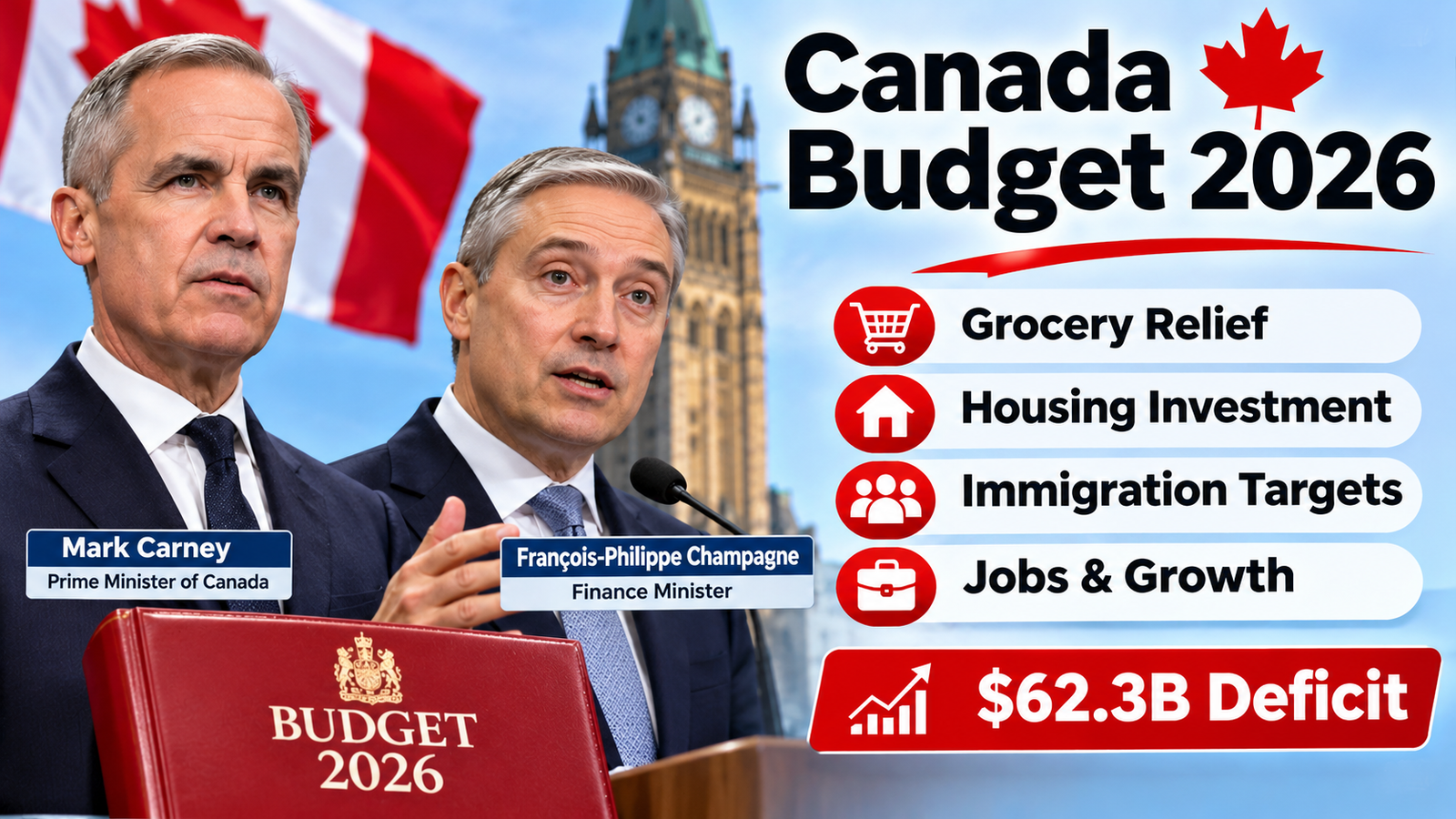
Carney government proposes additional grocery relief, major housing investments, new immigration targets and economic development measures amid concerns over federal borrowing.
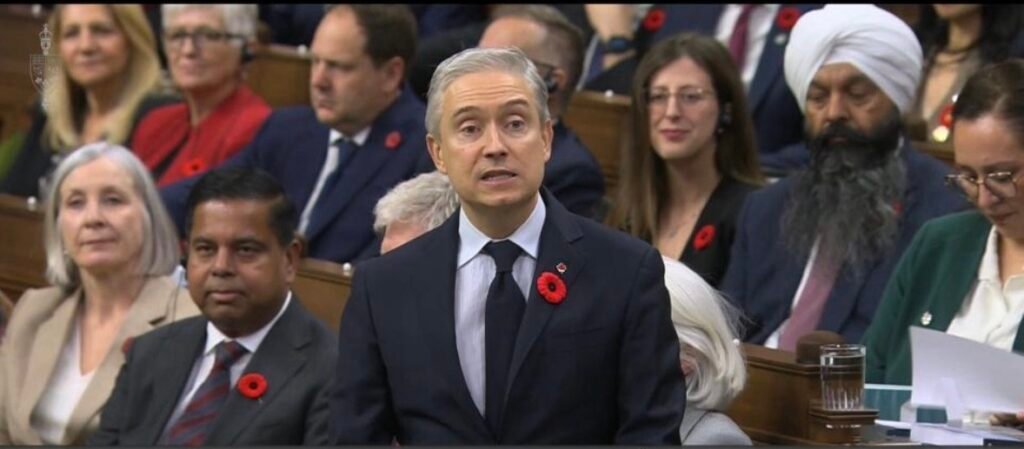
ਫੈਡਰਲ ਬਜਟ 2026 ਦੀ ਕਵਰੇਜ ਲਈ ਸੰਕੇਤਕ ਤਸਵੀਰ।
OTTAWA/SURREY, November 5, 2026 (GKM Media News Desk) — Prime Minister Mark Carney’s Liberal government has introduced Canada’s 2026 federal budget, outlining approximately $142.1 billion in new spending and tax measures over five years aimed at strengthening the economy, improving affordability and encouraging investment.
Presented in the House of Commons by Finance and National Revenue Minister François-Philippe Champagne, the budget emphasizes housing, employment, immigration, healthcare, infrastructure and Canada’s economic independence.
However, the government also projects a $62.3 billion deficit for the 2026–27 fiscal year, raising questions about federal borrowing and long-term fiscal sustainability.
Grocery Relief and Cost-of-Living Support
One of the budget’s key affordability proposals is an additional one-time supplement to the Canada Groceries and Essentials Benefit in early 2027.
The government says the measure would provide a 50% boost to the benefit for more than 12 million eligible Canadians, representing approximately $4.1 billion in additional assistance.
The payment is intended to help lower-income households manage rising grocery and essential living costs.
While the proposed assistance could provide immediate financial support to eligible families, it does not guarantee lower retail food prices.
Major Investment in Affordable Housing
The federal government has outlined approximately $11 billion in social housing support, alongside measures intended to expand housing supply and address homelessness.
The budget also proposes changes to mortgage financing and housing-related regulations.
For residents of Surrey, Vancouver and other expensive housing markets in British Columbia, these initiatives could have long-term implications.
However, their actual impact on housing affordability will depend on funding allocations, construction timelines and cooperation between different levels of government.
Immigration: New Targets for Permanent and Temporary Residents
The government has established a target of 380,000 permanent resident admissions annually from 2027 through 2029.
It has also set a target of 370,000 new temporary resident admissions per year over the same period.
The plan includes a target to transition up to 200,000 temporary residents already in Canada to permanent residency by the end of 2027.
These measures are particularly relevant to international students, foreign workers, employers and immigrant families.
Individual immigration applications will continue to be assessed under applicable eligibility requirements and program rules.
Jobs, Artificial Intelligence and Business Growth
Budget 2026 proposes major investments in artificial intelligence, infrastructure, innovation and Canadian industries.
The government has outlined a goal of creating approximately 90,000 AI-related employment opportunities for young Canadians.
Business investment incentives and infrastructure development are intended to strengthen productivity and create new economic opportunities.
The actual number of jobs created will depend on implementation and private-sector participation.
Healthcare and Community Services
The budget includes approximately $1.2 billion in funding for 2027–28 to extend agreements with provinces and territories supporting mental health, addictions treatment, home care and community healthcare services.
These investments are intended to strengthen access to essential services, although their practical impact will depend on provincial delivery and funding arrangements.
Energy, Infrastructure and Canadian Industries
The government has outlined more than $50 billion in electricity-grid investments and plans to support the addition of approximately 55,000 electric vehicle chargers by 2032.
Other proposals focus on clean technologies, critical minerals, energy security and domestic industrial development.
The government says these measures are designed to improve Canada’s long-term competitiveness and reduce economic vulnerabilities.
Support for Canadian Media and Content Production
The federal budget also includes an additional $300 million for CBC/Radio-Canada and $600 million in immediate support for Canadian content production.
These measures could have implications for Canada’s broadcasting, television, film and digital media sectors.
However, eligibility for independent and community-based media organizations will depend on individual funding program requirements.
Federal Deficit Raises Financial Concerns
Despite the proposed investments, the government expects a $62.3 billion federal deficit in 2026–27.
The government argues that investments in infrastructure, technology and domestic industries can support future economic growth.
At the same time, rising debt-servicing costs and continued borrowing remain important fiscal considerations.
The Parliamentary Budget Officer’s October 2026 outlook warned of weaker economic growth and increasing federal debt. That assessment was released before the new budget and did not include all of its newly announced measures.
What Does Budget 2026 Mean for Canadians?
Eligible lower-income households could benefit directly from additional grocery assistance, while housing, infrastructure and employment initiatives may provide longer-term economic benefits.
However, many middle-income Canadians continue to face pressure from housing costs, groceries, mortgage payments and other everyday expenses.
The budget’s proposals will require the applicable parliamentary, legislative and administrative processes before all measures can take effect.
GKM Media Analysis
Canada’s 2026 federal budget combines targeted affordability assistance with a broader strategy to stimulate investment, create jobs and strengthen economic independence.
The government is emphasizing long-term growth, while the projected deficit and ongoing affordability challenges remain central issues for public debate.
The key question for Canadians is how quickly these proposed investments and benefits will translate into meaningful improvements in everyday life.
GKM Media TV | Canada News Desk
Connecting Communities Through Digital Media Worldwide.