Lorne Doerkson poised to become British Columbia’s next premier; David Eby steps down as NDP leader following election-night defeat
SURREY, BC | October 24, 2026 | GKM Media News
British Columbia is preparing for a historic transition in provincial government after major Canadian news organizations projected a majority victory for the BC Conservative Party in Saturday’s general election.
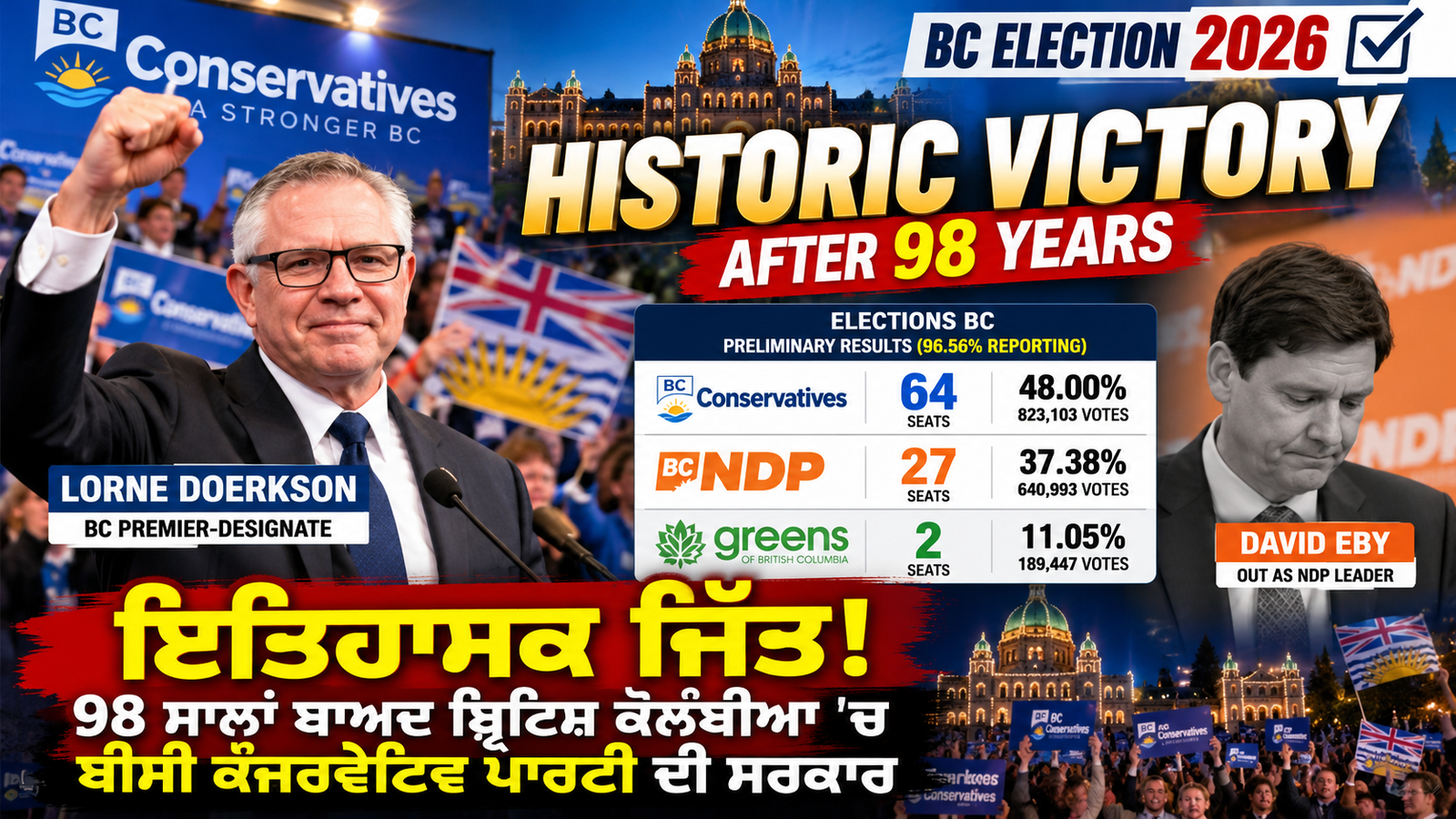
According to Elections BC’s preliminary results at 11:15p.m. Pacific time, the Conservatives were leading in 64 of the province’s 93 electoral districts. The BC NDP led in 27 districts, while the BC Green Party led in two.
The projected result positions Conservative Leader Lorne Doerkson to become the next premier, ending nine years of New Democratic Party government.
Official Vote Count Shows Strong Conservative Lead
Elections BC reported the following preliminary province-wide totals:
Party
Ridings Leading
BC Conservatives
64
823,103
48.00%
BC NDP
27
640,993
37.38%
BC Greens
2
189,447
11.05%
CentreBC
0
27,896
1.63%
OneBC
0
Approximately 96.56% of ballot boxes had reported at that point, with more than 1.7 million ballots considered.
These figures represent preliminary leads, not certified election results. Additional ballots remain to be counted.
A Historic Return to Government
The projected Conservative victory marks a remarkable revival for a party that last formed a majority government in 1928 under Simon Fraser Tolmie.
In 2024, the Conservatives captured 44 seats but fell short of forming government. The party’s political fortunes have now changed dramatically following an election campaign shaped by affordability concerns, economic uncertainty and public dissatisfaction with provincial services.
David Eby Resigns as NDP Leader
Premier David Eby announced his resignation as BC NDP leader during his election-night address.
Eby congratulated Doerkson and acknowledged that the New Democrats would move into opposition.
His decision to call an early election in September 2026 had been intended to seek a renewed mandate amid economic and political challenges.
Instead, the election produced a projected Conservative majority.
Conservative Gains Across Surrey
The preliminary results point to a particularly strong Conservative performance in Surrey, where several closely watched contests shifted toward the party.
In Surrey North, Conservative incumbent Mandeep Singh Dhaliwal led with 7,276 votes, compared with 4,148 for NDP candidate Sahib Thind.
In Surrey-Newton, Conservative candidate Harj Dhaliwal received 7,225 votes, ahead of NDP candidate Jessie Sunner, who received 5,424.
Surrey-Fleetwood Conservative Garry Purewal led with 8,639 votes against 6,482 for NDP candidate Jagrup Brar.
In Surrey-Guildford, Conservative Garry Thind led with 7,701 votes, compared with 6,242 for NDP incumbent Garry Begg.
Surrey City Centre remained a closer contest, with Conservative Zeeshan Wahla receiving 5,313 votes and NDP candidate Amna Shah receiving 4,931.
Conservative candidates Bryan Tepper in Surrey-Panorama and Jessy Sahota in Surrey-Serpentine River also held substantial leads.
These preliminary riding-level results suggest a major shift in Surrey’s political representation, although final certification is still pending.
Economic and Public Policy Challenges Ahead
Doerkson’s incoming government is expected to face immediate pressure to deliver on campaign commitments concerning affordability, taxation, housing supply, health care and public safety.
The Conservatives have advocated reducing regulatory barriers, expanding natural gas production and providing tax relief.
In Surrey, residents and businesses will be watching closely for decisions involving hospital capacity, transportation infrastructure, housing costs and extortion-related crime.
What Happens Next?
Although news organizations have projected a Conservative majority, Elections BC’s official counting process continues.
Mail-in, absentee and other outstanding ballots may affect individual riding totals, particularly in close contests.
The incoming government will also need to complete the formal transition process before assuming office.
The projected result represents one of the most significant changes in British Columbia’s modern political history, with the Conservatives positioned to return to government after nearly a century.
Editor’s note: This report uses Elections BC preliminary results from October 24, 2026, at 11:15p.m. Pacific time. Riding leads and vote totals remain subject to change.